

Modified Bitumen for Multi-Layer Protection on Older Strip Centers
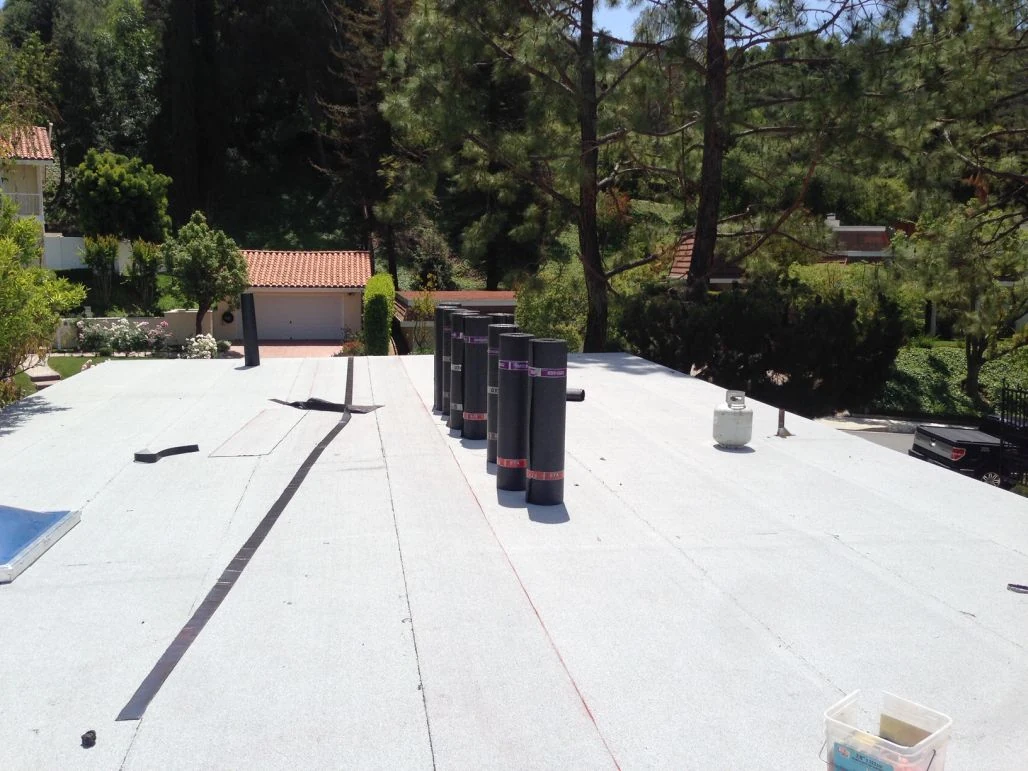
A lot of the older strip retail and hotel-addition roofs we inspect along the Strand were built with modified bitumen, and it's still a system we recommend when redundant, multi-ply coverage matters more than a single reflective membrane.
Why Multi-Ply Redundancy Matters in Wind-Driven Rain
A tropical storm doesn't just push wind across a roof -- it drives rain sideways into every lap, seam, and flashing detail on the building. Modified bitumen's layered construction, usually a base sheet and a cap sheet fused together, gives water two chances to be stopped instead of one. If the top layer takes minor damage in a storm, the base layer is often still doing its job underneath.
That redundancy is part of why we still spec modified bitumen on buildings where a single-ply puncture would mean an immediate leak -- loading docks, roofs with heavy foot traffic, or older buildings with a history of penetrations added over the years.
Torch-Down vs Self-Adhered: What We Choose and Why
Torch-applied modified bitumen fuses each layer with an open flame, which gives a strong bond but requires careful fire-safety protocol, especially close to occupied hotel rooms or restaurant kitchens. Self-adhered systems skip the torch and bond with a factory-applied adhesive backing, which we favor on occupied buildings where an open flame near guests or tenants isn't worth the risk.
Cold weather isn't the issue here that it is up north, but summer heat changes handling on both systems -- self-adhered sheets can be trickier to position correctly once ambient temperatures climb, so we plan install timing around that.
Granulated Cap Sheets and Coastal UV
The mineral granules embedded in a modified bitumen cap sheet do double duty: they protect the asphalt layer underneath from UV breakdown and give the roof some resistance to foot traffic and minor impact. On a coastal roof taking intense summer sun for months, that granule layer is doing real work, and granule loss over time is one of the clearest signs a cap sheet is approaching the end of its service life.
We check granule wear at the same time we check seams and flashing, walking high-traffic areas near rooftop units and access points where granule loss tends to show up first.
- Older hotel and motel roof additions
- Multi-tenant strip centers with loading dock traffic
- Roofs recovering an existing built-up system
- Buildings with a history of added penetrations
- Low-slope sections behind steep-slope clubhouse roofs
- Property management portfolios standardizing on one system
Common Candidates Along Highway 17 Business
A stretch of the older commercial corridor along 17 Business still carries original or once-recovered modified bitumen roofs from buildings put up decades before the newer construction further inland. Many of these are solid candidates for another modified bitumen layer rather than a full tear-off, provided the insulation underneath tests dry.
We see the same pattern in some of the smaller motel properties that predate the big resort towers -- multiple additions over the years each with their own roof section, tied together with modified bitumen flashing at the transitions.
Flashing Details That Fail First in a Hurricane
Base flashing at parapet walls and roof-to-wall transitions is where we see the most storm damage on modified bitumen roofs, more often than the field membrane itself. Wind-driven rain finds any gap in that flashing fast, so we spend extra time on transition details during both install and inspection rather than treating them as an afterthought once the field is down.
When We Recommend Modified Bitumen Over a Single-Ply System
We don't default to modified bitumen just because a building already has it. Loading docks, roofs with recurring foot traffic from rooftop equipment servicing, and buildings with a documented history of storm punctures are where the redundant, multi-layer construction earns its cost over a single-ply membrane.
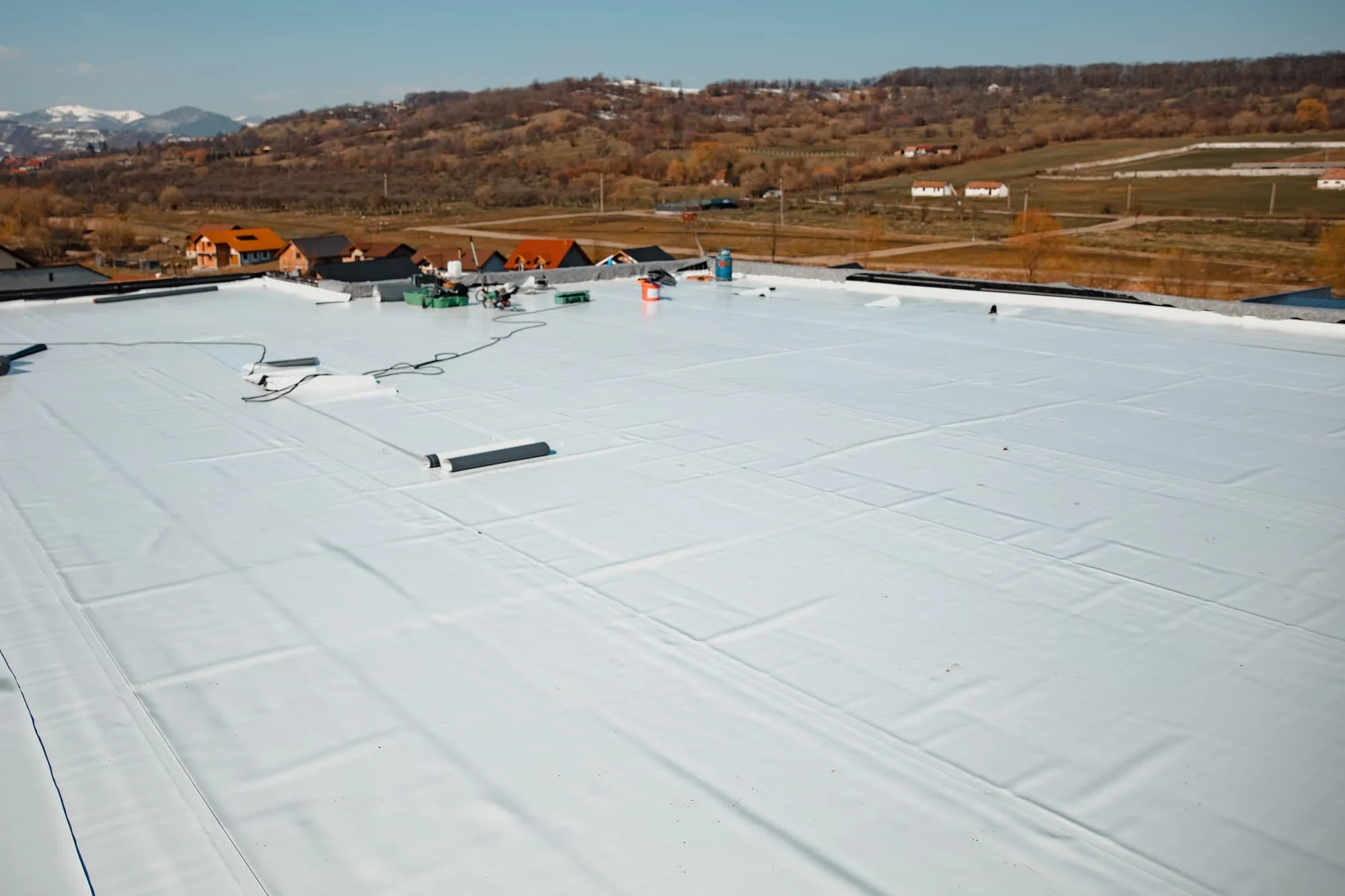
For a straightforward retail box with light rooftop traffic and no unusual exposure, TPO or PVC often makes more sense on cost and long-term reflectivity. We walk owners through both options with real numbers rather than pushing whichever system happens to be the most familiar.
Property management groups running several older buildings along the Strand sometimes prefer standardizing on modified bitumen across their portfolio just to simplify maintenance training for one system. That's a reasonable call on a portfolio of similar-vintage buildings, even when it isn't the lowest-cost option for any single roof.
Modified Bitumen Questions We Hear Often
Is torch-down safe on an occupied hotel roof?
We follow strict fire-watch protocol when torch-applying near occupied space, and on many hotel jobs we recommend self-adhered systems instead to remove the open-flame risk entirely.
How does modified bitumen compare to TPO for storm resistance?
The multi-ply construction gives it redundancy a single-ply membrane doesn't have, though TPO's welded seams can outperform mod-bit laps in pure wind-uplift testing. The right choice depends on the building's specific risk factors.
Can you recover an old built-up roof with modified bitumen?
Often, yes, if the existing insulation tests dry and the deck can support the added weight. We confirm both before recommending it.
How long does a granulated cap sheet typically hold up here?
It depends on granule retention and flashing condition more than a fixed number. We track granule loss at each inspection as the leading indicator of remaining service life.
Do you match cap sheet color to existing roof sections?
Where it matters for building appearance, yes, though matching aged granules exactly isn't always possible on an older roof.