Roofing for Manufacturing Buildings Along the 501 Corridor
Manufacturing operators out toward Conway, Aynor, and Loris run production schedules that don't pause for a roofing crew, and the buildings themselves carry equipment loads a retail roof was never designed for. We scope every industrial job around production continuity first.
Production Downtime Is the Real Cost
A roof leak over a production line doesn't just mean water damage, it means a shift shutdown, and that's a bigger cost to a manufacturing operator than the repair itself. We prioritize emergency response for active production facilities and plan larger reroofing projects in phases so at least part of the plant stays running through the work.
When a full shutdown is unavoidable, we coordinate the timing with plant management around planned maintenance windows or lower-production periods rather than treating the roof schedule as the only variable that matters.
Rooftop Equipment Loads on Industrial Buildings
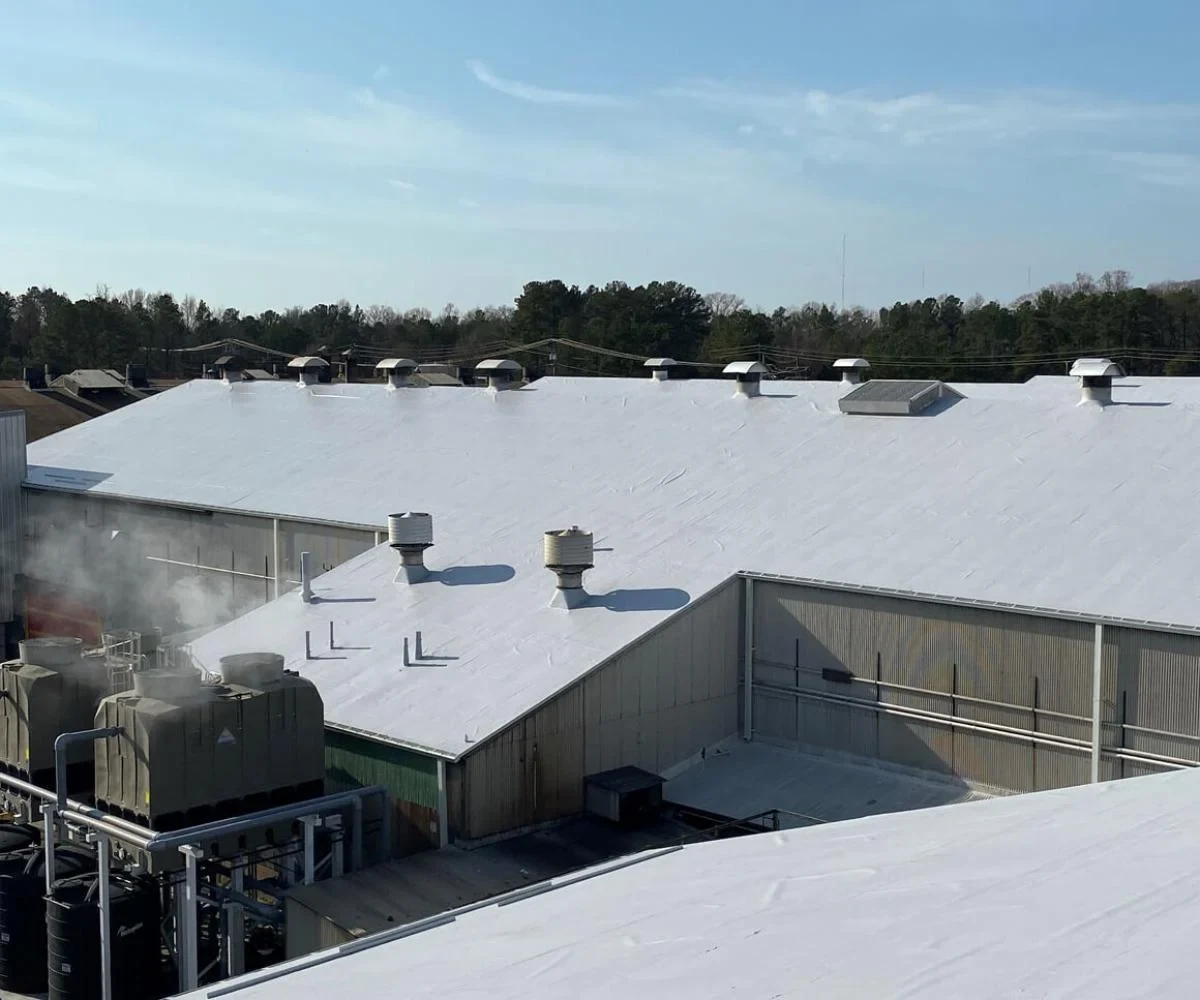
Manufacturing roofs along this corridor often carry dust collection systems, exhaust fans, and process equipment that a standard office or retail roof never sees. Every one of those units adds structural load and creates a penetration that needs specific flashing detail, and dust or process byproducts can also degrade membrane faster than normal weathering alone.
We inspect industrial roofs with that equipment load in mind, checking curb attachment and structural deck condition around heavy units rather than looking only at the membrane surface between them.
Vibration from process equipment mounted on the roof deck also loosens fastener patterns over time in a way a static office roof never experiences. We check curb bolts and equipment anchors for that kind of gradual loosening as a routine part of our industrial inspection, since it's a common cause of a leak that shows up months after equipment was installed.
Combustible Dust and Fire Code Considerations
Facilities handling combustible dust, whether from wood processing, food production, or metal fabrication, have specific housekeeping and roof design considerations tied to fire and life safety code. We coordinate roof work near dust collection systems and exhaust points with whatever safety protocol the facility already runs, and we flag any roof-level condition that could affect a facility's fire code compliance.
That's not something we treat as optional paperwork. A roofing crew working near an active dust collection system needs to understand the hazard rather than simply avoid it by accident.
Storm Season and Industrial Building Exposure
Large flat industrial roofs catch more wind uplift force than a smaller building simply because of surface area, and metal building roof systems common on this corridor have their own failure points at seam fasteners and ridge caps that a membrane roof doesn't share. We inspect both roof types differently ahead of hurricane season rather than applying one checklist to every building.
Drainage matters more here too. A large industrial roof with undersized or clogged drains during a heavy rain event can pond enough water to stress the structural deck, so pre-season drain clearing is a standing item on our industrial client checklist.
Buildings sitting closer to the Waccamaw or Little Pee Dee River floodplains near Conway and Aynor also see slower storm drainage recovery after a heavy rain event, which can leave water sitting on a low-slope roof longer than it would on higher ground. We factor that site-specific drainage behavior into our pre-storm checklist for facilities in those areas.
What Industrial Roof Clients Get
- Phased project sequencing to keep partial production running during reroofing
- Priority emergency response for leaks over active production lines
- Structural and curb inspection specific to heavy rooftop equipment loads
- Coordination with plant safety protocol near dust collection and exhaust systems
- Pre-hurricane-season drain clearing and structural load review
- Separate inspection standards for metal building versus membrane roof systems
Working With Plant Facilities and Safety Managers
Industrial facilities usually have a plant engineer or facilities manager who owns roof condition alongside production concerns, and we report findings directly to that person in terms tied to operational risk rather than membrane age alone. A ranked list of what fails first under continued production load is more useful to a plant manager than a generic inspection report.
We also keep a written maintenance history for repeat clients on this corridor, since a plant manager reviewing capital budget requests benefits from seeing the trend across several years of inspections rather than one isolated report each time a problem surfaces.
Questions Manufacturing Facilities Ask
Can you keep part of the plant running during a reroof?
In most cases, yes. We phase the work by roof section so production in unaffected areas can continue while we work over another part of the building.
How do you handle roofs with dust collection or exhaust systems?
We coordinate with your facility's safety protocol before working near those systems and flag any roof-level condition that could affect fire code compliance.
Do metal building roofs need different inspection than membrane roofs?
Yes. We check seam fasteners, ridge caps, and panel laps on metal roofs, which is a different failure pattern than the membrane seams and flashing we check on single-ply systems.
What's your response time for a leak over an active production line?
We treat active production leaks as priority calls and aim to get a tech on site the same day to locate and temporarily stop the leak.
Can heavy rooftop equipment cause structural problems we wouldn't notice?
It can, particularly at curb attachment points and around ponding water near undersized drains. We check structural deck condition around heavy units as a standard part of industrial inspections rather than looking at the membrane alone.