
TPO Membrane for Reflective, Wind-Rated Flat Roofs on the Strand
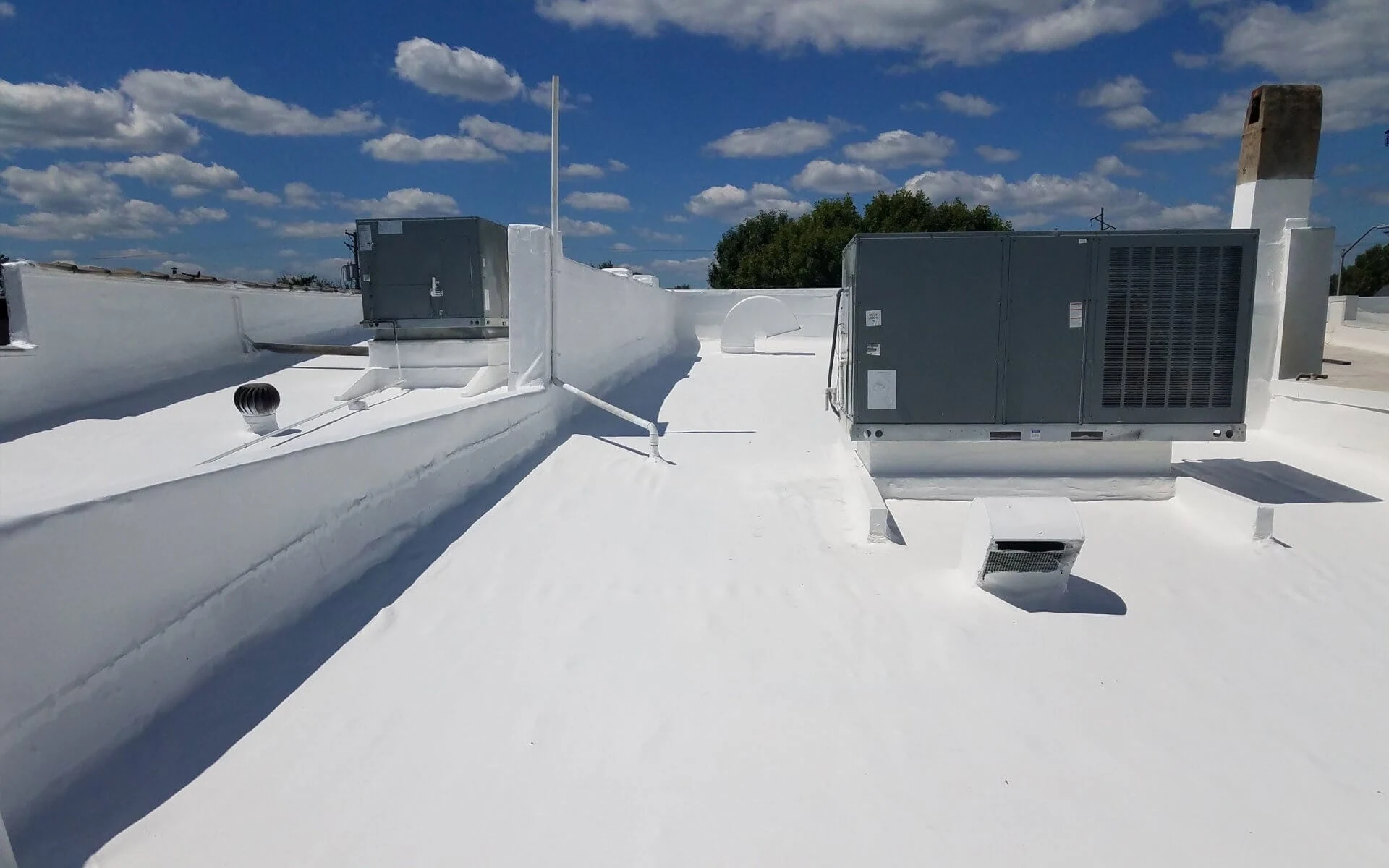
White TPO is the membrane we spec most often on Grand Strand flat roofs, from hotel towers on Ocean Boulevard to big-box retail along US-501. It reflects coastal sun, welds into a strong seam, and takes a wind-uplift fastening pattern well.
Why White TPO Makes Sense on Oceanfront Roofs
A hotel roof here runs air conditioning against direct coastal sun for months at a stretch. A white TPO surface reflects a large share of that solar load back off the deck instead of soaking it into the membrane and the insulation below, which takes some pressure off rooftop units that are already working overtime through a Myrtle Beach summer.
That reflectivity also slows the rate the membrane itself ages. UV breaks down roofing material over time no matter what it's made of, but a lighter surface runs cooler and generally holds its flexibility longer than a dark membrane exposed to the same coastal sun.
Heat-Welded Seams and What They Mean for Wind Uplift
TPO seams are hot-air welded into a single fused sheet rather than glued or taped together. That matters most during a tropical storm, when wind is working every seam and lap on the roof at once. A properly welded seam holds as one piece; a weak seam is where wind finds its way underneath the membrane and starts peeling it back.
We test seam welds during installation and again at inspection, because a seam that looks fine from the ground can have a cold weld that only shows up under load.
Fastening Patterns We Spec for Coastal Wind Zones
Mechanically attached TPO gets fastened through the insulation into the deck on a pattern that tightens up at the perimeter and corners of the roof, since that's where wind uplift pressure concentrates hardest in a hurricane. Fully adhered systems skip the exposed fasteners entirely, which we favor on buildings where roof penetrations are already a corrosion concern.
Which approach we recommend depends on deck type, building height, and how exposed the roof is to open water -- a low motel roof set back from the beach doesn't need the same enhanced perimeter fastening as a resort tower with unobstructed ocean-facing exposure.
- Oceanfront and near-beach hotel roofs
- Big-box and multi-tenant retail centers
- Distribution and flex buildings inland
- Medical office and clinic roofs
- Multifamily and condominium properties
- Restaurant roofs without heavy grease exhaust
Where TPO Falls Short Near Salt Water
Mechanically attached TPO relies on exposed fasteners under the membrane, and any penetration through the field is a spot where salt-laden moisture can eventually find its way to metal. We flash every penetration to keep water off that hardware, but it's still a maintenance point we watch on coastal roofs more closely than we would forty minutes inland.
TPO also isn't the first choice over standing water. Ponding areas age a membrane faster regardless of brand, so on roofs with structural ponding we usually talk about drainage correction or a coating system built for standing water before we talk about membrane choice.
Maintenance That Keeps a TPO Roof at Full Term
We check seams, flashing, and fastener heads at each inspection, with extra attention after any named storm that put sustained wind across the roof. Membrane thickness -- 60 mil versus 80 mil -- also plays into how much punishment a roof can take from foot traffic around rooftop units before a repair is needed.
A TPO roof with clean seams and intact flashing detail is one of the lower-maintenance systems we install on the Strand, but it still needs eyes on it after every hurricane season, not only when a leak shows up inside.
Thickness and Warranty Terms Owners Ask About
60 mil TPO is the standard we spec on most retail and light-commercial roofs, since it balances cost against durability for a roof that doesn't see heavy foot traffic. 80 mil goes on roofs with more rooftop equipment, more service traffic, or a longer intended service life -- a resort roof carrying a dense field of HVAC units is a common candidate.
Manufacturer warranty terms vary by thickness and by whether the install is mechanically attached or fully adhered. We walk owners through what's actually covered before they sign off on a system, since wind and hail exclusions differ more than most owners expect.
What FMs Ask Before Specifying TPO
Is TPO strong enough for hurricane-season wind uplift?
With the right fastening pattern and enhanced perimeter attachment, yes. We size the fastening to the building's exposure and height rather than using one pattern everywhere.
Does salt air shorten a TPO roof's life?
It shortens the life of exposed fasteners and edge metal faster than it affects the membrane itself, which is why flashing detail and fastener protection matter as much as membrane choice.
Can TPO go over an existing roof, or does it need a tear-off?
Depends on the condition of what's underneath. If the existing roof is dry and code allows another layer, a recover is often possible; wet insulation forces a tear-off.
How does TPO compare to PVC for a beachfront building?
Both weld well and resist wind uplift. PVC has an edge on chemical and grease resistance, which matters more for kitchen-heavy buildings than for a typical retail or office roof.
How often should a TPO roof get inspected here?
We recommend at least twice a year, plus a walk-through after any storm that brought sustained wind across the property.