
Where 80 Mil TPO Earns Its Cost on the Grand Strand
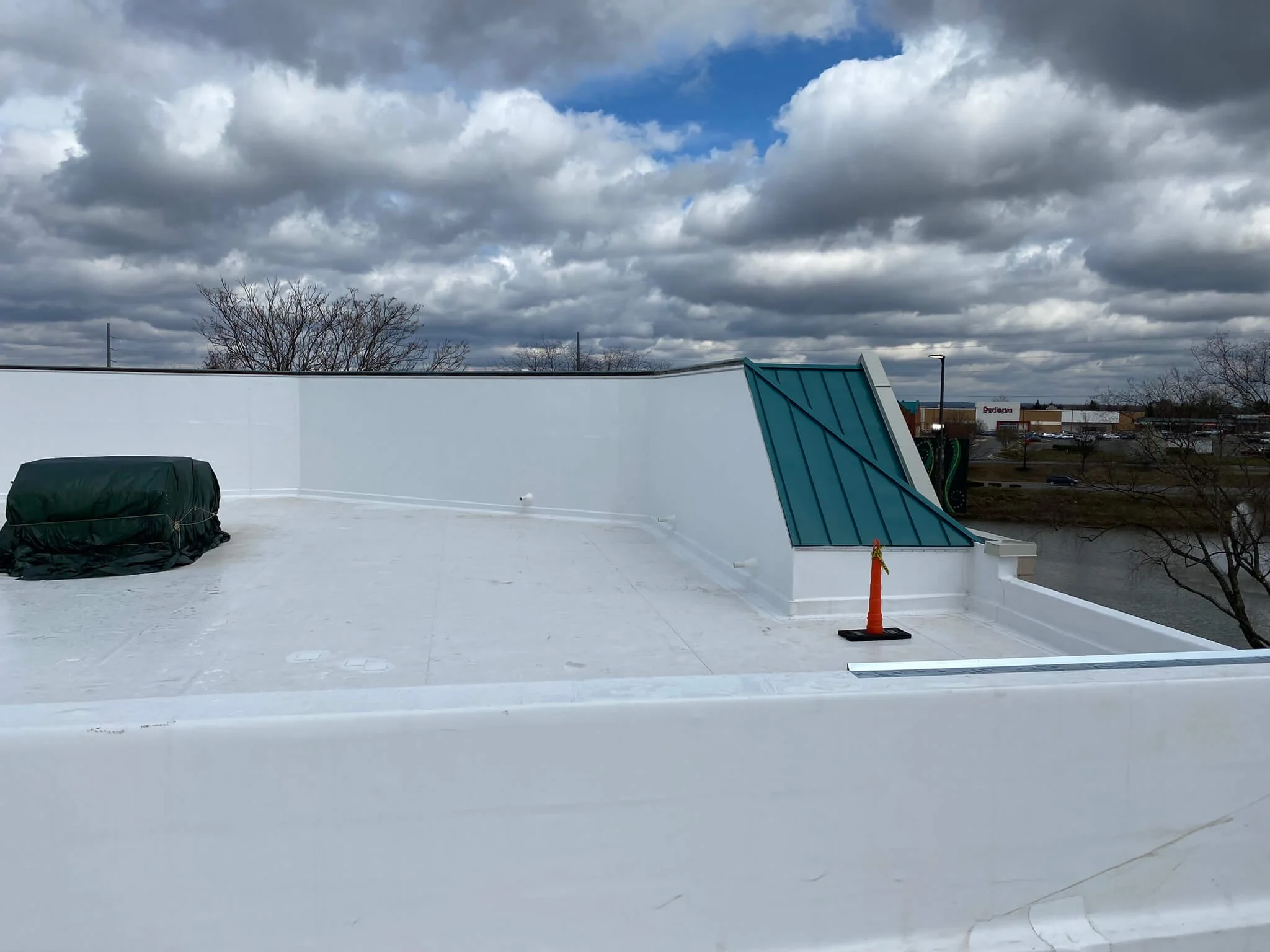
80 mil TPO costs more per square than 60 mil, and on a lot of buildings that extra cost isn't necessary. On the buildings where it is necessary - oceanfront hotels, roofs carrying heavy rooftop mechanical loads, buildings in the highest wind exposure category - the added thickness buys real margin. We spec it selectively, not as a default.
What the Extra Thickness Actually Buys
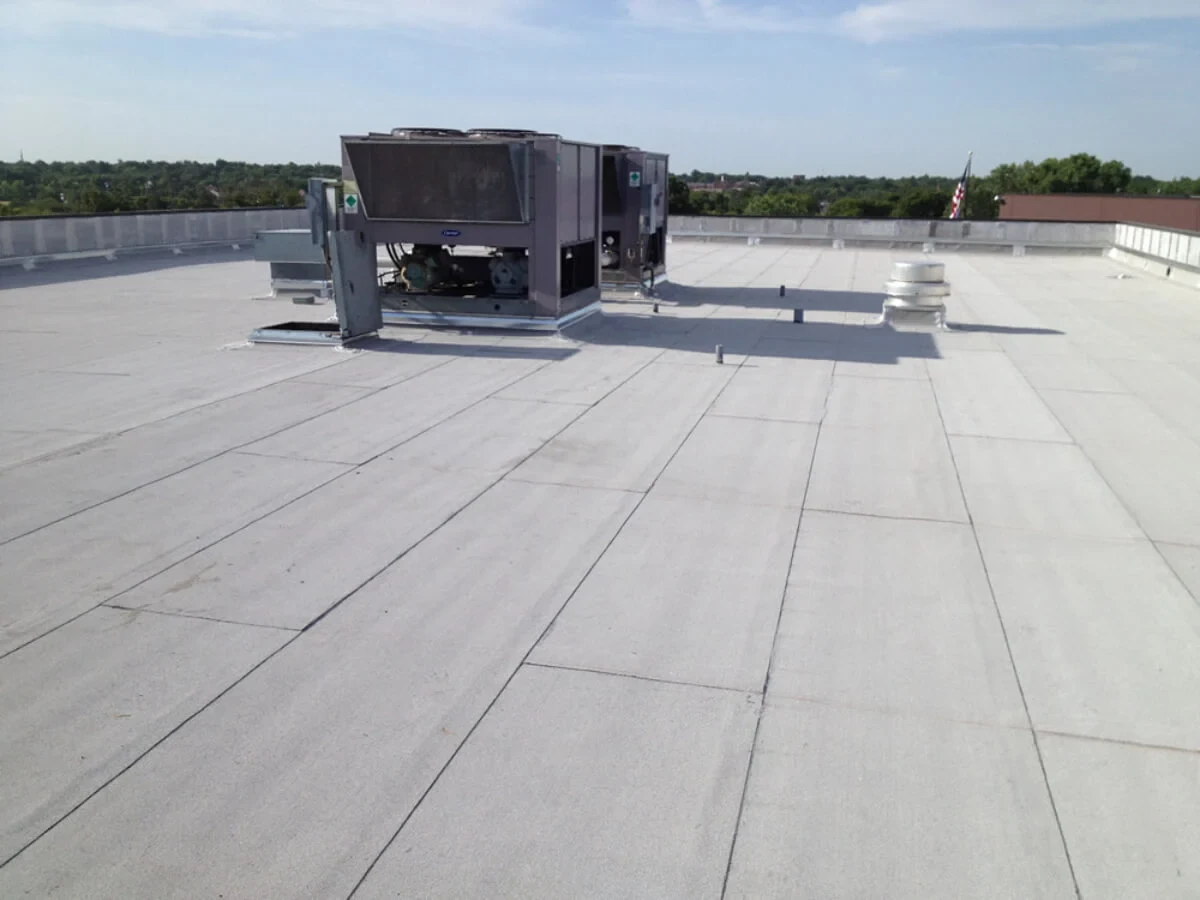
Going from 60 mil to 80 mil doesn't change the membrane chemistry, the color options, or how the seams weld. What it changes is puncture resistance, tear strength, and how the membrane tolerates rooftop traffic and debris impact over the roof's service life. On a hotel roof off Ocean Boulevard with satellite equipment, HVAC condensers, and periodic contractor access for pool equipment or event setups, that added margin shows up as fewer punctures over a twenty-year service life.
We also look at deck condition. An older deck with minor irregularities that wouldn't concern a rigid membrane can telegraph through a thinner TPO sheet over time. 80 mil handles that kind of minor deck imperfection with more tolerance than 60 mil does.
High-Velocity Wind Zone Fastening
Coastal Horry County buildings, especially anything within a mile or two of the Atlantic, sit in some of the highest wind design pressures in the state. On these roofs the fastening pattern matters more than almost any other spec decision. Perimeter and corner zones get significantly denser fastener spacing than the field, following the uplift calculations tied to the building's height, exposure category, and roof geometry - not a one-size pattern pulled off a shelf.
We've walked enough post-storm roofs along the coast to know where failures start: the perimeter edge, almost every time. A field membrane can survive a tropical system intact while a poorly fastened edge peels back and takes the rest of the roof with it. On 80 mil systems facing our highest wind zones, we follow the manufacturer's enhanced perimeter fastening schedule and document the fastener pattern for insurance and code purposes.
Salt Air and Metal Component Corrosion
The TPO membrane resists salt exposure well on its own, but every roof assembly includes metal - edge metal, coping, fasteners, pipe boots with metal collars. Along the immediate coastline, salt-laden air corrodes standard-grade fasteners and unprotected metal edge details faster than it degrades the membrane itself. We spec corrosion-resistant fastener coatings and metal components on beachfront jobs specifically because of this, not as an upsell but because we've replaced enough rusted edge metal on five- and six-year-old roofs to know standard hardware doesn't hold up a mile from the water.
UV and Heat Load on Reflective Roofs
White 80 mil TPO reflects a meaningful amount of solar heat compared to a dark roof, which matters on the big flat roofs over hotels and resort amenity buildings running HVAC and pool equipment most of the year. Reflectivity slows down but doesn't eliminate UV-driven surface aging, so our inspection visits include a check for chalking, granule loss around seams, and any early surface degradation, particularly on south- and west-facing slopes that take the harshest sun angle.
- Higher puncture and tear resistance than 60 mil for heavy rooftop traffic
- Enhanced perimeter and corner fastening for the highest coastal wind zones
- Better tolerance for minor deck irregularities on older buildings
- Hot-air welded seams tested for weld strength before sign-off
- Reflective surface reduces rooftop unit heat load and run time
- Corrosion-resistant fastener and edge metal options for beachfront exposure
When 60 Mil Is the Better Call Instead
We'll say directly when 80 mil isn't necessary. Office buildings and set-back retail without heavy rooftop equipment traffic, moderate wind exposure inland of the immediate coastline, and straightforward roof geometry usually don't need the added thickness. Recommending 80 mil across the board regardless of the building would pad the invoice without changing the roof's actual performance for that structure.
Insulation and Cover Board Pairing
80 mil TPO performs best paired with a cover board rated for the roof's traffic and impact exposure, rather than a bare polyiso layer alone under the membrane. On hotel roofs where technicians access rooftop equipment regularly, a denser cover board spreads point loads across the insulation instead of concentrating them under a boot or ladder foot, which protects the membrane and the insulation underneath it over the roof's service life. We match cover board density to the specific traffic pattern of each roof rather than defaulting to the lightest option available.
Frequently Raised Questions About 80 Mil TPO
Does 80 mil TPO cost significantly more than 60 mil?
Material cost runs higher per square, and the difference is worth budgeting for on high-exposure or high-traffic roofs. On lower-exposure buildings the added cost doesn't buy a proportional benefit.
Is 80 mil required for oceanfront hotels?
It's not a code requirement by thickness alone, but we recommend it on most oceanfront and near-oceanfront hospitality roofs given the wind exposure and equipment traffic those roofs typically carry.
Does thicker membrane mean better wind uplift rating?
Thickness contributes to puncture and tear resistance, but the uplift rating comes primarily from the fastening pattern and attachment method specified for the wind zone, not membrane thickness alone.
How often should an 80 mil TPO roof be inspected on the coast?
We recommend at least twice a year, with an additional walk after any named storm that brings sustained wind or wind-driven debris to the property.
Can 80 mil TPO be installed over an existing roof system?
Sometimes, if a moisture survey confirms the existing roof is dry and the deck is sound. Wet insulation or heavy ponding usually points to tear-off instead of recover regardless of membrane thickness.