
White EPDM for Heat-Sensitive Buildings Near the Coast
White EPDM gives us the flexibility and seam behavior of traditional rubber roofing with a reflective surface that doesn't run as hot as black EPDM under Grand Strand sun. It's a narrower niche product than TPO or standard black EPDM, but on the right building - usually one with older EPDM in the assembly already, or a client set on rubber's movement tolerance without the heat penalty - it's worth understanding.
What White EPDM Actually Is
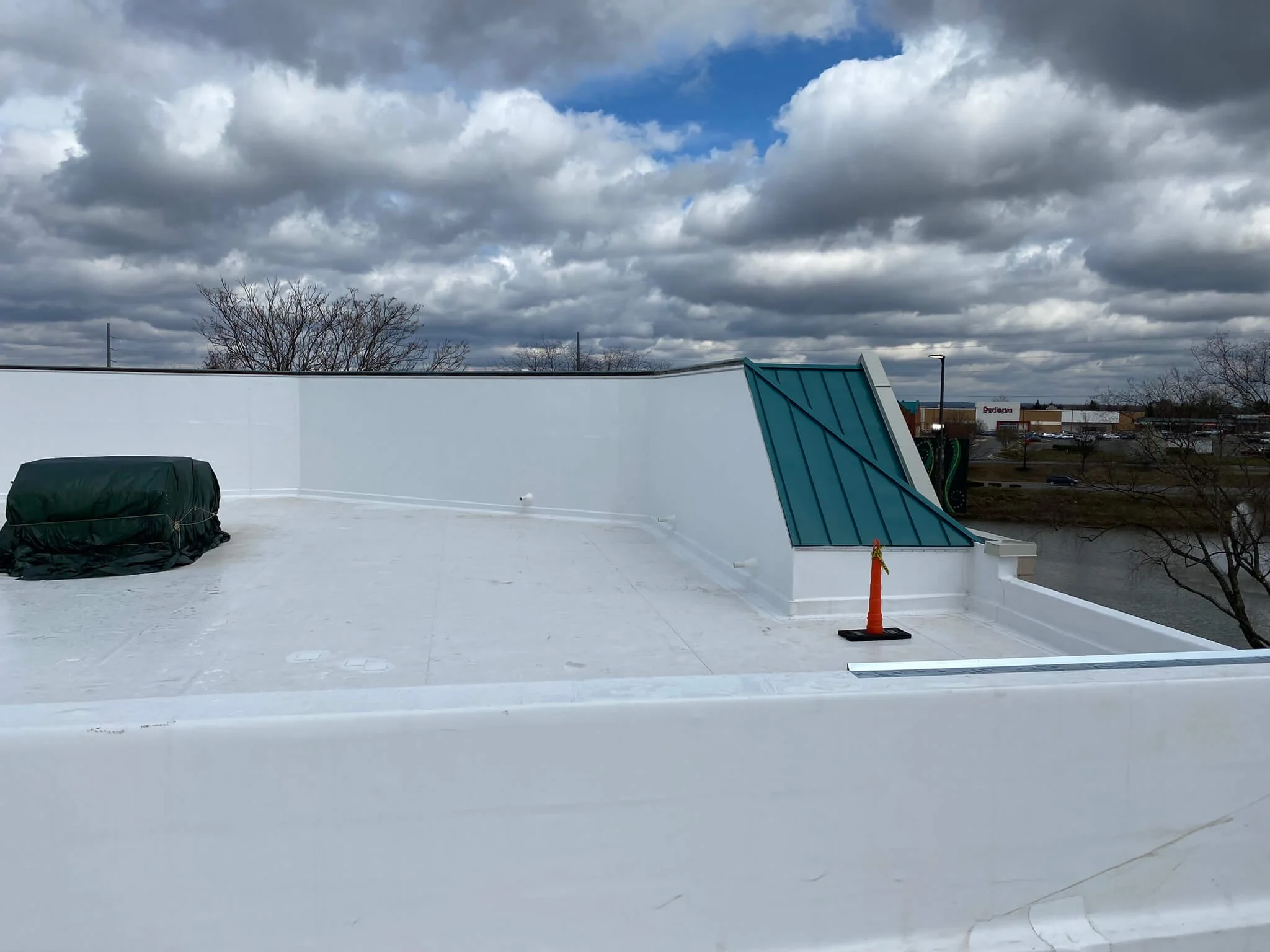
White EPDM is the same synthetic rubber membrane as the black version, formulated with a white surface layer instead of the standard black compound. The flexibility, seam bonding method, and installation approach are largely the same as black EPDM. What changes is solar reflectivity and, in most manufacturer lines, a somewhat higher material cost than black.
We don't see white EPDM specified as often as black EPDM or white TPO around Myrtle Beach, mostly because building owners choosing a reflective membrane tend to land on TPO by default. Where white EPDM earns a look is on buildings converting from an existing EPDM system where staying within the rubber membrane family simplifies the transition, or on projects where the deck movement tolerance of rubber outweighs TPO's other advantages.
Reflectivity Against Beach-Climate Heat Load
A white membrane surface reflects a meaningful share of solar radiation compared to black EPDM, cutting the heat that transfers into the building and the rooftop equipment sitting on it. For hospitality buildings and retail centers running HVAC and refrigeration equipment through the summer season, that reduced heat load can lower rooftop unit run time noticeably compared to a dark roof of the same square footage.
Reflectivity does fade somewhat over the membrane's service life as the surface weathers and collects airborne salt and dust, which is common along the coastline. We include a surface cleaning check in our maintenance visits for reflective roofs specifically because a dirty membrane loses a chunk of its reflective benefit until it's cleaned.
Seams and Fastener Corrosion Near the Water
White EPDM shares the same seam construction as black EPDM - adhesive-taped field seams or factory-applied tape on fully adhered systems. The coastal humidity and salt exposure that affect black EPDM seam durability apply the same way here, so we prioritize fully adhered systems with factory seam tape on coastal jobs and check seam condition at every service visit.
Exposed fasteners and edge metal corrode the same regardless of membrane color, and along the immediate coast that means corrosion-resistant hardware isn't optional if we want the roof's edge detail to hold up as long as the field membrane does. Salt fog reaches roofs within a mile or two of the ocean routinely, and standard zinc-coated fasteners don't hold up to that exposure the way a marine-grade coating does.
- Same flexible rubber membrane as black EPDM with a reflective white surface
- Lower rooftop heat load than black EPDM under Grand Strand sun
- Reflectivity declines with surface soiling and periodic cleaning restores it
- Fully adhered, factory-taped seams recommended over field-taped seams here
- Corrosion-resistant fasteners and edge metal for coastal salt exposure
- Costs somewhat more per square than standard black EPDM in most product lines
When We Recommend White EPDM Over TPO
If a building has an existing EPDM assembly with sound insulation and the roof geometry favors staying within the same membrane family, white EPDM can be the more efficient recover path than converting entirely to TPO. We also look at it when a client specifically wants rubber's movement tolerance on an older, less rigid deck but still wants the heat performance benefit of a reflective surface. Outside of those situations, white TPO usually wins the comparison on cost and seam-welding reliability.
Flashing Details on a White EPDM Roof
White EPDM shares the same flashing and penetration detailing approach as black EPDM - liquid-applied flashing compounds and pourable sealer pockets at curbs and pipe boots rather than the taped seams used at membrane joints. Those details age at the same rate regardless of the membrane's surface color, so a white EPDM roof needs the same periodic inspection of pourable sealer pockets and curb flashings that we recommend on any EPDM system, particularly on buildings closer to the coast where humidity accelerates wear on those compounds.
We track flashing condition separately from membrane and seam condition on every EPDM maintenance visit, since it's common for the field membrane to still be in good shape while an aging pourable sealer pocket at an HVAC curb is quietly letting water into the deck below.
Questions About White EPDM
Is white EPDM more expensive than black EPDM?
Generally yes, the white formulation typically carries a modest cost premium over standard black EPDM per square in most manufacturer lines.
Does white EPDM reflect heat as well as white TPO?
Reflectivity is comparable when both membranes are new and clean, though TPO's hot-air welded seams and broader manufacturer support make it the more common choice for reflective single-ply roofs in this market.
Do the seams on white EPDM perform differently than black EPDM seams?
No, the seam construction and adhesive bonding method are the same regardless of surface color, so the same coastal humidity considerations apply to both.
Can an existing black EPDM roof be converted to white?
Not by coating alone in a way that matches factory white EPDM performance, though an elastomeric coating over sound black EPDM can improve reflectivity as a maintenance measure rather than a full membrane conversion.
How often should reflective membranes get cleaned on coastal roofs?
We check surface condition at each maintenance visit and recommend cleaning when soiling has visibly reduced reflectivity, which tends to happen faster on roofs closer to the ocean and near landscaping or HVAC exhaust.