
Black EPDM on Older Grand Strand Commercial Roofs
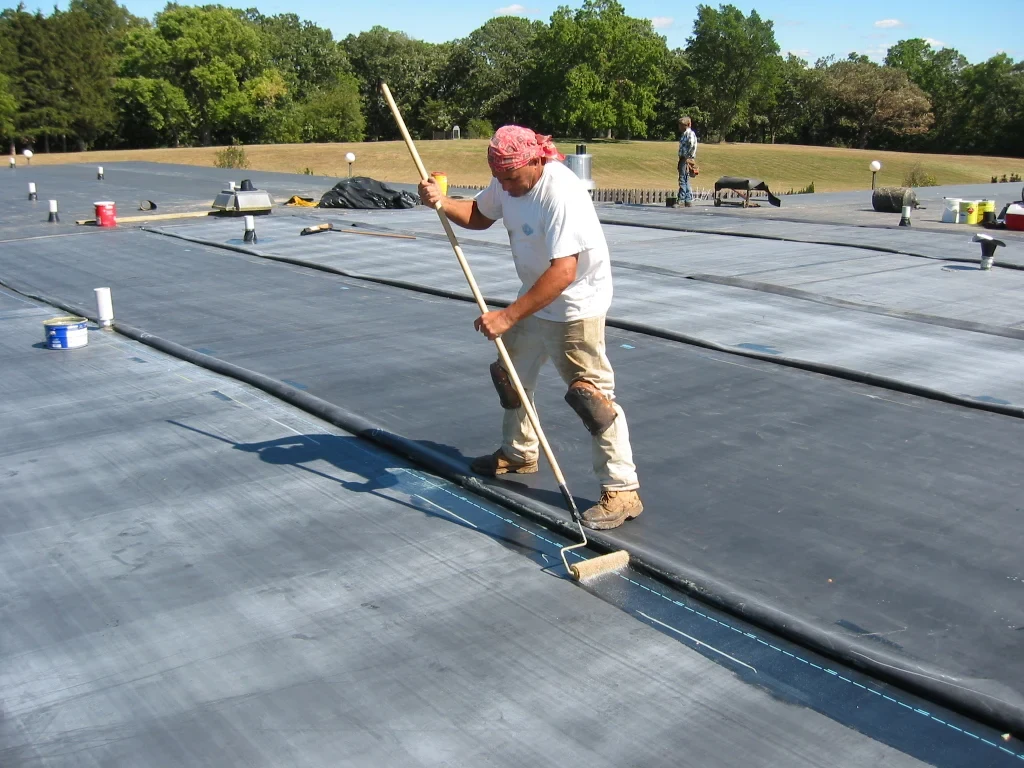
Black EPDM has been going on Myrtle Beach commercial buildings for decades, and a good amount of it is still up there - older motels along Kings Highway, small office buildings set back from the beach, and strip retail that predates TPO becoming the default spec. It's a rubber membrane with real strengths and a couple of trade-offs worth understanding before we recommend it on a new job.
Why So Much Older Coastal Stock Is Still EPDM
EPDM's biggest advantage is flexibility. The rubber membrane stretches and recovers as a building moves, which matters on older decks that have settled over the years or structures with more expansion joint movement than a newer building. We see this on a number of older commercial buildings inland of the boardwalk, where decades of settling have left decks that aren't perfectly flat anymore.
Material cost is the other reason black EPDM keeps showing up on estimates for straightforward low-slope roofs. For a simple roof geometry without a lot of penetrations, EPDM often comes in lower than TPO or PVC while offering comparable service life when installed and maintained correctly.
The Heat Gain Trade-Off in a Beach Climate
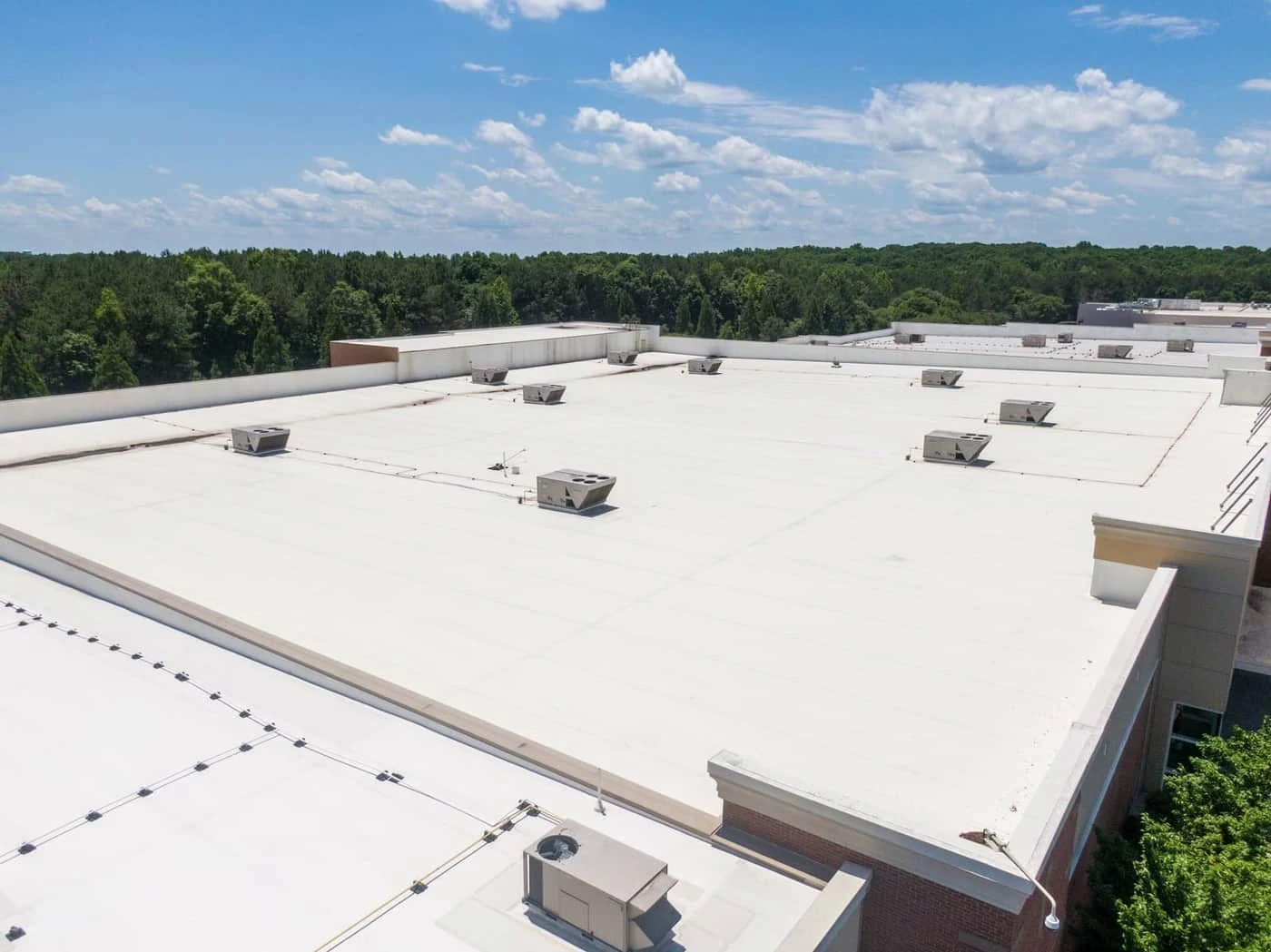
The obvious downside of black EPDM in a market like ours is solar heat absorption. A dark roof surface runs noticeably hotter than white TPO under the same Grand Strand sun, which translates into higher rooftop unit run time on buildings that keep HVAC systems working through most of the year. On smaller commercial buildings where the roof surface area is modest relative to the mechanical load, that heat gain difference can be a real operating cost over the roof's life, and we walk clients through that trade-off against the lower material cost before locking in a membrane color.
Seam Performance in Coastal Humidity
Traditional EPDM seams rely on seam tape and adhesive rather than the hot-air welds TPO uses, and that adhesive bond is where most EPDM failures start. Humidity, salt fog, and temperature swings along the coast can accelerate seam tape aging faster than in a drier inland climate. We inspect EPDM seams closely on our maintenance visits - lifted edges, adhesive that's gone brittle, or seam tape that's started to separate are all things we catch and reseal before they become active leaks.
Fully adhered EPDM systems with factory-applied seam tape have improved on this significantly over field-taped seams from older installations, and when we're doing a full EPDM reroof we spec the fully adhered detail rather than a mechanically fastened system with field seaming wherever the deck allows it.
Fastener and Metal Corrosion in Salt Air
The membrane itself handles salt exposure reasonably well, but exposed metal fasteners, edge metal, and flashing hardware are a different story this close to the Atlantic. Standard-grade fasteners corrode faster along the coastline than a few miles inland, and a corroding fastener head can compromise the seal around it well before the membrane itself shows any sign of aging. On coastal EPDM jobs we spec corrosion-resistant fastener coatings and stainless or coated edge metal rather than standard hardware.
- Flexible rubber membrane tolerates deck movement and settling well
- Lower material cost than TPO or PVC on simple, low-penetration roofs
- Fully adhered systems with factory seam tape outperform older field-taped seams
- Dark surface increases rooftop heat load and HVAC run time in beach sun
- Corrosion-resistant fasteners and edge metal recommended for coastal exposure
- Seam inspection at every maintenance visit catches adhesive failure early
When We Still Recommend Black EPDM
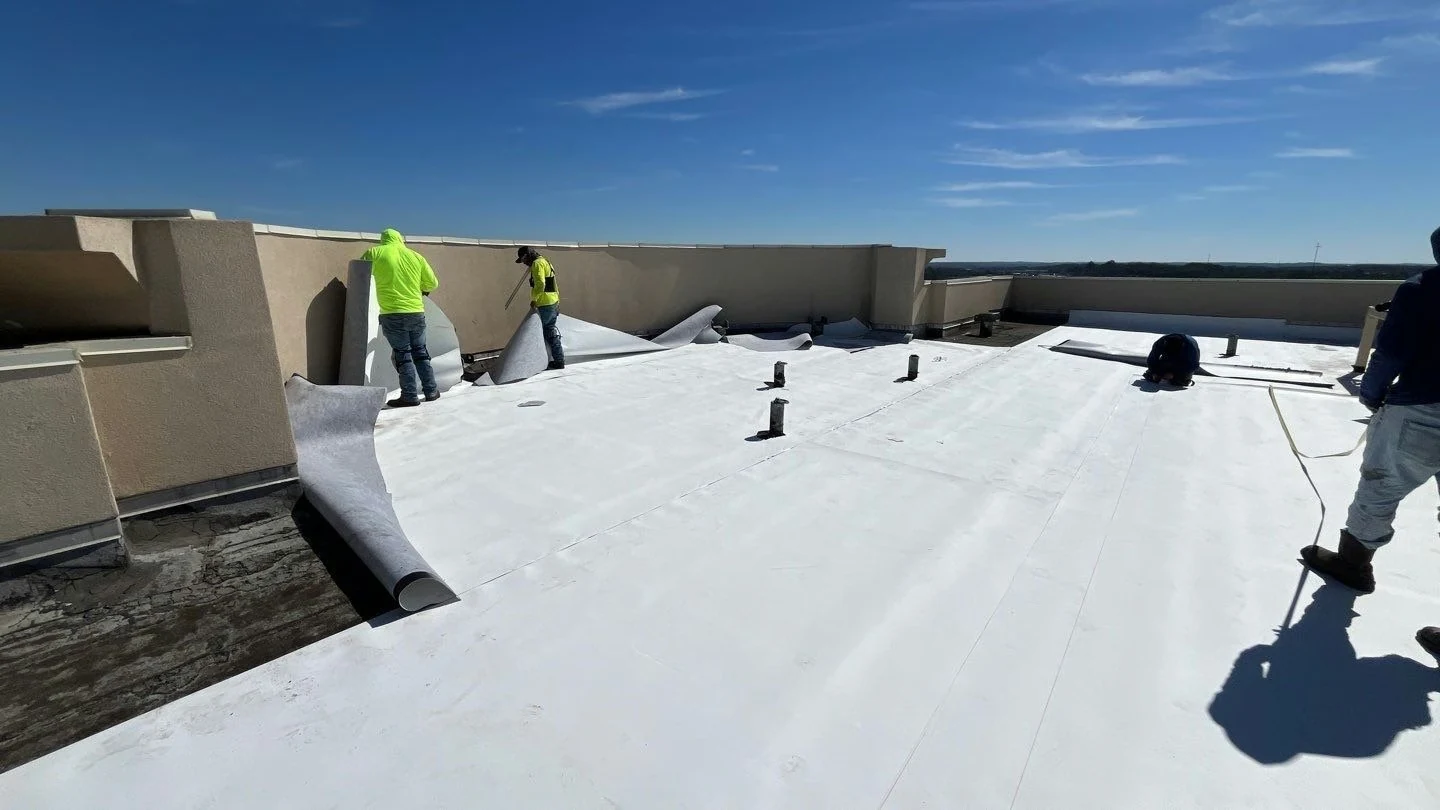
We spec black EPDM when the roof geometry is simple, the building doesn't have heavy rooftop mechanical load driving up cooling costs, and budget is the deciding factor over a comparable TPO system. It's also the more practical recover option on some older buildings where the existing membrane and insulation package favors staying with rubber rather than converting the whole assembly to single-ply thermoplastic.
Flashing and Penetration Detail Work
A lot of black EPDM's real-world performance comes down to how well the flashings and penetration details were built, more than the field membrane itself. Pipe boots, HVAC curbs, and parapet terminations on an EPDM roof rely on liquid-applied flashing compounds and cured pourable sealer pockets more than the pressure-sensitive tape used on TPO seams, and those details need periodic attention as the roof ages. On older buildings we inspect around Kings Highway and the inland office corridors, worn pourable sealer pockets around older HVAC curbs are one of the most common leak sources we find, well before the membrane field itself shows any problem.
We rebuild those pockets and re-flash aging penetrations as part of routine EPDM maintenance rather than waiting for a leak call, since catching a degraded pourable sealer pocket during a scheduled visit costs a fraction of chasing an active leak after a heavy rain event.
Questions We Hear About Black EPDM
Does black EPDM cost less than TPO installed?
Material cost is usually lower for a comparable roof, particularly on simpler geometries with fewer penetrations. Labor and detail work can narrow that gap depending on the building.
Is EPDM a bad choice for a hot climate like Myrtle Beach?
It's not disqualifying, but the dark surface does absorb more heat than white TPO, which shows up in higher rooftop unit run time. We factor that into the recommendation for buildings with significant HVAC load.
How does salt air affect EPDM seams specifically?
The rubber membrane itself holds up reasonably well, but adhesive-taped seams can age faster in coastal humidity and salt exposure than they would inland, which is why we prioritize seam inspection on coastal EPDM roofs.
Can black EPDM be coated white to cut heat gain?
Yes, an acrylic or elastomeric coating over sound EPDM can improve reflectivity, though coating an aging membrane isn't a substitute for addressing seam or fastener issues underneath it first.
How long does black EPDM typically last on a coastal roof?
Service life depends heavily on installation quality and maintenance, particularly seam upkeep. A well-installed and maintained EPDM roof performs for a long service life; neglected seams shorten that considerably.