

Keeping Water Moving Off Flat Roofs During Heavy Rain
A flat commercial roof lives or dies by how well water gets off it. Drains and scuppers that work fine during a normal afternoon shower can be completely overwhelmed by the rainfall rates a tropical system dumps in a short window, and a roof that can't move that volume of water fast enough starts ponding, stressing the membrane, and in the worst cases backing up into the building.
Rainfall Volume Here Is Different
Tropical downpours associated with named storms and even routine summer thunderstorms along the Strand can drop rain at rates well beyond what a roof drainage system designed decades ago was sized for. Drains and scuppers that were adequate when a building was constructed may be undersized relative to current rainfall intensity, particularly on older hotel and retail properties. We evaluate drainage capacity against actual system condition, not only against the original design spec, since decades of debris buildup and minor deck settling can reduce effective capacity well below what the drawings assumed.
Why Drains Clog Here Specifically
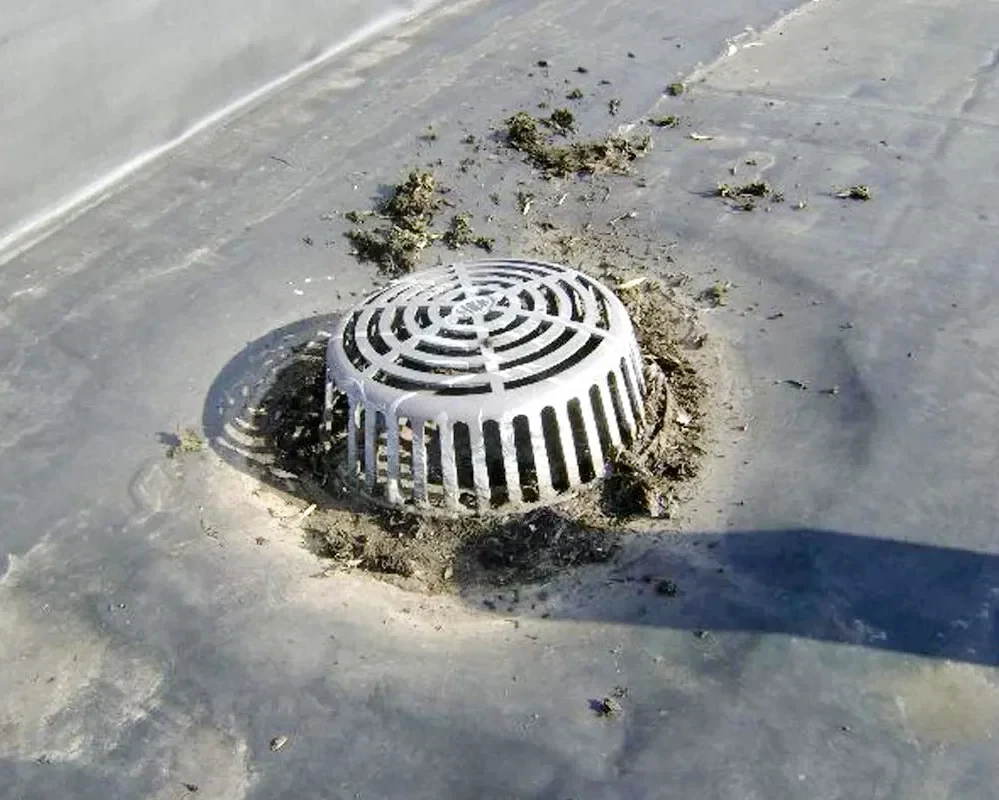
Palm frond debris is a near-constant issue on properties with any landscaping nearby. Wind-blown beach sand settles into low points and drain bowls. Roofing granules washing off aging modified bitumen or built-up systems accumulate at drain strainers over time. Any one of these alone is manageable with routine clearing; left unaddressed through a full season, they combine to significantly reduce a drain's effective flow rate right when storm season puts the most demand on it.
Ponding Water and What It Does to a Membrane
Standing water that doesn't drain within the industry-standard window stresses membrane seams, accelerates UV-related degradation at the water's edge line, and adds significant dead load to the roof structure during a major rain event. Chronic ponding is also one of the fastest ways to void portions of a manufacturer warranty, since most warranties specify drainage performance as a condition of coverage. We identify ponding areas during inspection and trace the cause, whether it's a clogged drain, a low spot from deck settling, or insufficient roof slope from the original construction.
Overflow Scuppers and Code Requirements
Building code requires secondary, or overflow, drainage as a backup in case primary drains become blocked or overwhelmed, typically set at scupper openings positioned slightly above the primary drain's operating level. On older buildings, we frequently find overflow scuppers that were never properly installed, have been sealed over during a past reroof, or are undersized relative to current code requirements. Given the rainfall intensity this market sees, a properly functioning overflow system isn't a formality; it's the backup that keeps a clogged primary drain from becoming an interior flooding event.
- Drain and scupper clearing as a standard maintenance item, not a special request
- Drainage capacity evaluation against current condition, not only against original design
- Ponding water identification and root-cause tracing
- Overflow scupper inspection for proper installation and code compliance
- Strainer and drain bowl repair or replacement where corroded or damaged
- Scheduling drain service ahead of hurricane season specifically
Internal Drains Versus Perimeter Systems
Newer hotel and retail construction along the Strand often uses internal roof drains tied into the building's plumbing, while older properties frequently rely on perimeter scuppers and gutters instead. Internal drains are less exposed to wind-blown debris but harder to inspect and clear without roof access equipment reaching the drain bowl itself. Perimeter scuppers are easier to inspect visually but more exposed to the debris sources common here. We service both types and explain the specific maintenance needs of whichever system your building has.
Seasonal Clearing Schedule
Drain and scupper clearing belongs on every scheduled maintenance visit, but we push extra attention to it specifically ahead of hurricane season, when the consequence of a clogged drain is highest. A five-minute clearing job in May is a lot cheaper than an emergency response to interior flooding during an August storm because a drain nobody checked was completely blocked.
What Chronic Ponding Signals
If drains are clear and scuppers are functioning correctly but ponding persists in the same spot after every rain event, that usually points to a structural issue, deck settling or insufficient slope, rather than a maintenance issue. We'll tell you when a ponding problem needs a tapered insulation fix or deck-level correction rather than continuing to treat it as a drainage clearing item that never fully resolves.
We mark chronic ponding areas during every inspection and track whether the footprint is growing over successive visits. A ponding area that's expanding year over year is usually a sign the deck itself is settling further, and that's worth flagging to ownership before it becomes a membrane failure rather than after.
Drainage Questions
How often should roof drains be cleared here?
At every scheduled maintenance visit at minimum, with extra attention before hurricane season given how much debris and rainfall volume this market sees.
What's the difference between primary and overflow scuppers?
Primary drains handle normal rainfall; overflow scuppers are a code-required backup positioned to activate if primary drainage becomes blocked or overwhelmed during heavy rain.
Can ponding water damage a roof that isn't leaking yet?
Yes. Standing water stresses seams and accelerates membrane degradation well before it develops into a visible interior leak.
Why would a drain system that worked fine for years suddenly become inadequate?
Debris accumulation, deck settling, and rainfall intensity all change over time. A system adequate at construction can fall behind actual conditions without anyone noticing until a major rain event exposes it.
Do you fix ponding by adding more drains?
Sometimes, but often the better fix is tapered insulation to correct roof slope. We diagnose the actual cause before recommending a solution.