
Exposed-Fastener Metal Roofing for Flex and Industrial Buildings
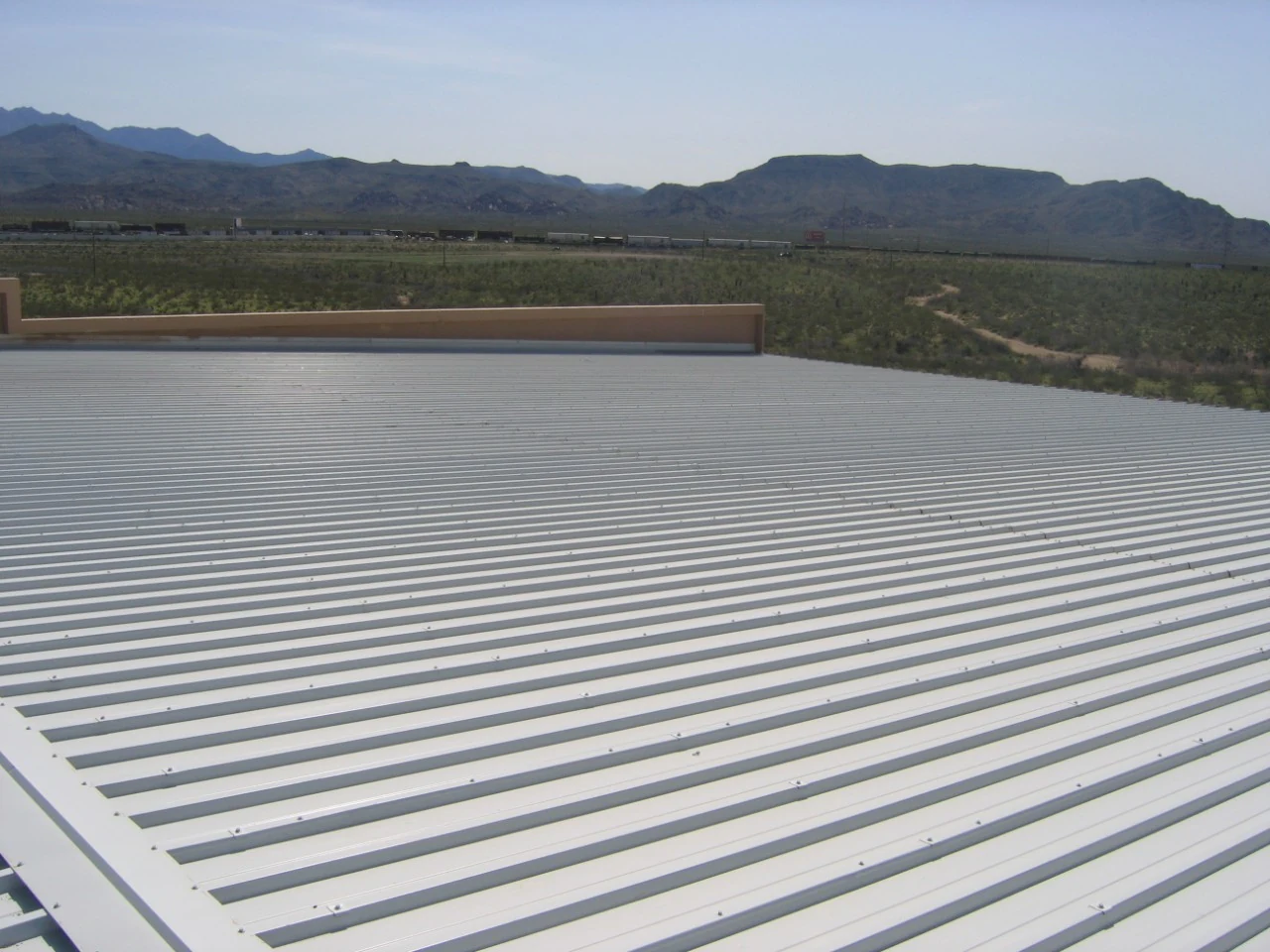
R-panel and other exposed-fastener metal systems still cover most of the flex, industrial, and self-storage buildings we see around Conway and along the SC-707 and US-501 growth corridors. It's an affordable system, but it needs a maintenance plan the concealed-fastener systems don't.
Where R-Panel Still Gets Specified Here
Pre-engineered metal buildings dominate the industrial park around Conway, and R-panel is the standard roof and wall system on most of them -- straightforward to install, inexpensive per square, and well suited to the large simple roof shapes typical of a warehouse or distribution building. We also see it on a lot of the newer self-storage development spreading along the SC-707 corridor, where owners are building for function first.
It's less common the closer a building sits to the immediate beachfront, where standing seam's concealed fasteners hold up better against sustained salt exposure. Inland toward Conway and Aynor, where salt exposure is lighter, R-panel remains a practical, budget-conscious choice.
Why Exposed Fasteners Fail Faster on the Coast
Every screw holding an R-panel roof down sits exposed to weather, and each one has a rubber washer that seals against water intrusion. Salt-laden air and UV both degrade that washer material faster than it degrades inland, and once a washer fails, the fastener is a direct path for water into the building. On buildings closer to the coast we see washer failure showing up years earlier than we'd expect on the same roof forty minutes inland.
Corrosion also attacks the fastener head itself over time, especially on lower-grade screws. We check fastener condition as a matter of course on any R-panel roof inspection this side of Conway, since it's usually the first thing to go wrong.
Screw Pull-Out and Wind Uplift on Long Metal Panels
R-panel roofs rely on every fastener holding its grip in the purlin below to resist wind uplift, and a long, wide panel run puts real load on those connection points during a tropical storm. Fastener spacing gets tightened at eaves, ridges, and panel edges specifically because that's where uplift pressure concentrates hardest, the same way it does on single-ply membrane systems.
Panels that have already lost some fastener grip from corrosion are the ones most likely to start working loose in high wind, which is part of why we treat fastener maintenance as a wind-safety issue and not only a leak-prevention one.
- Pre-engineered warehouse and distribution buildings
- Self-storage facility roofs
- Light-industrial flex space in the Conway industrial park
- Contractor yard and equipment storage structures
- Agricultural and farm-service buildings inland
- Metal building additions on retail properties
Re-Fastening and Panel Repair vs Full Replacement
A lot of R-panel maintenance work is exactly this: re-driving or replacing fasteners with fresh washers before a small leak turns into water damage inside the building. On a roof with widespread corrosion, a full re-fastening pass across the whole field is often more cost-effective than chasing individual leaks one at a time as they show up.
Full panel replacement comes into play when the panels themselves have corroded through, not only the fasteners -- usually a sign the roof has gone well past its expected service interval without maintenance.
Sealant and Closure Strip Maintenance That Extends Panel Life
Ridge caps, eave closures, and lap sealant between panel runs all age faster in coastal UV and heat than most owners expect, and a failed closure strip lets wind-driven rain in at the ridge line even when the field panels themselves are sound. We check these details on the same schedule as fasteners, since they're a common source of leaks that get misdiagnosed as membrane failure when the panel itself is fine.
Coating an R-Panel Roof Instead of Replacing It
On a metal roof with no ponding and reasonably intact panels, a reflective acrylic or silicone coating can extend service life considerably at a fraction of the cost of a full metal reroof. That's often the more sensible first move on a self-storage or flex building where budget matters more than appearance and the panels themselves haven't corroded through.
We inspect fastener and washer condition before recommending a coating, since coating over a roof with widespread failed washers just delays the same repair work rather than replacing the need for it.
Setting a Realistic Maintenance Budget for Metal Building Owners
R-panel's lower upfront cost comes with an ongoing maintenance line that owners sometimes don't budget for at purchase. We help property managers set a realistic annual inspection and re-fastening budget rather than letting the roof run unchecked until a tenant complaint forces an emergency call.
Exposed-Fastener Roofing Questions
How often do R-panel fasteners need to be checked here?
We recommend inspecting fastener and washer condition at least once a year, more often on buildings within a couple miles of the coast where corrosion moves faster.
Is R-panel a bad choice for a beachfront building?
We generally steer beachfront and near-beach buildings toward standing seam instead. R-panel remains a solid, cost-effective choice further inland where salt exposure is lighter.
Can a re-fastening pass really extend the roof's life?
Yes, when it's done before corrosion has compromised the panel itself. Catching it at the fastener stage is far cheaper than replacing corroded panels.
How do you tell if a leak is from a fastener or a panel failure?
We trace water staining back to its source during inspection -- fastener leaks tend to show as isolated drip points, while panel corrosion usually shows broader staining along a panel seam or lap.
What wind rating should an R-panel roof meet on the Strand?
It depends on building height and exposure. We size fastener spacing and panel gauge to the specific site rather than using a single blanket spec across every building.