
Roofing the Store and the Fuel Canopy Without Shutting Down the Pumps
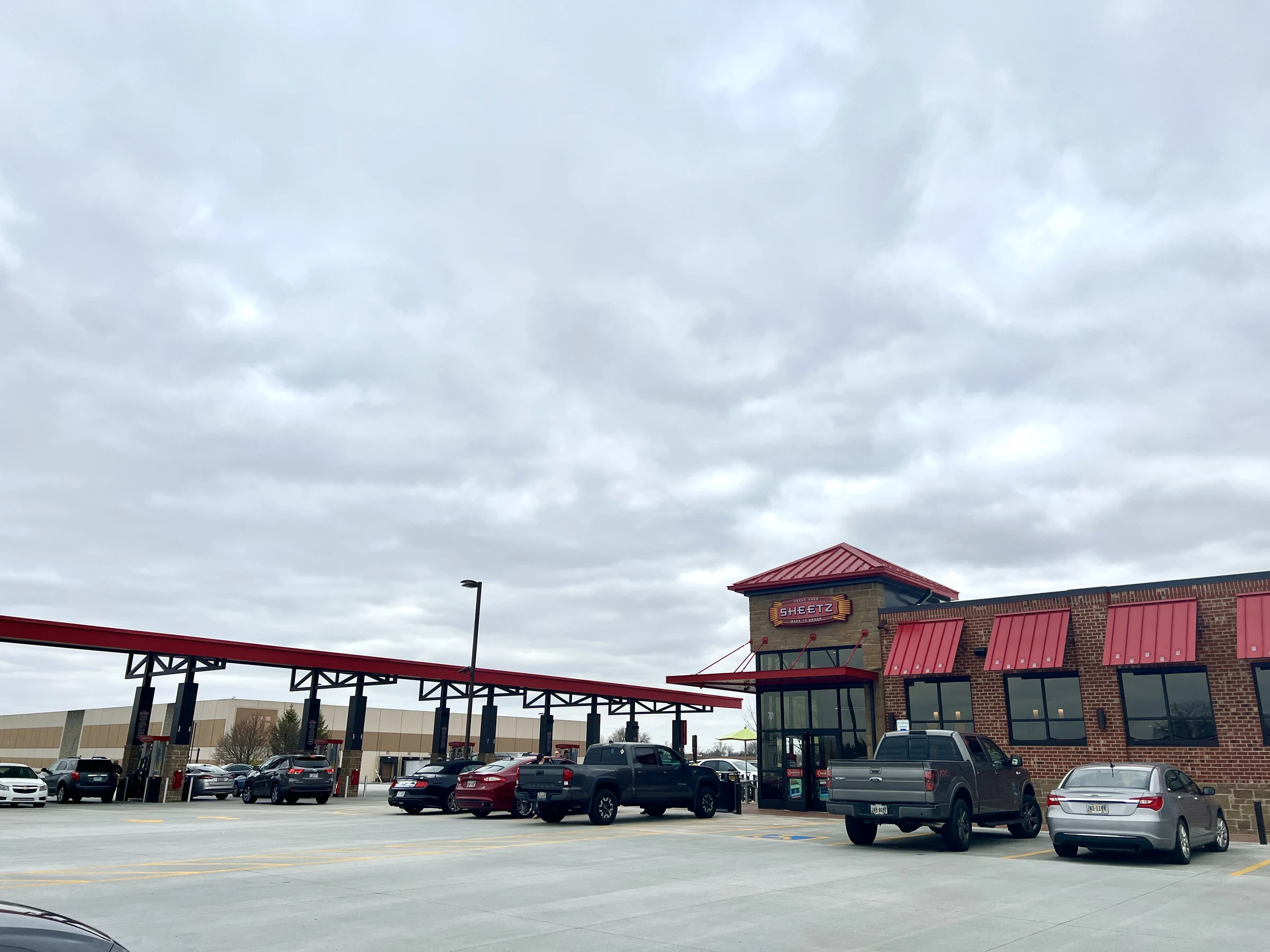
Convenience stores along the coastal corridors and the highway approaches into Myrtle Beach are really two roof projects in one property - a low-slope membrane over the store itself and a standing seam or metal canopy over the fuel islands, each with different structural and code considerations. We scope them separately even though they're on the same site.
Two Different Roof Systems, One Property
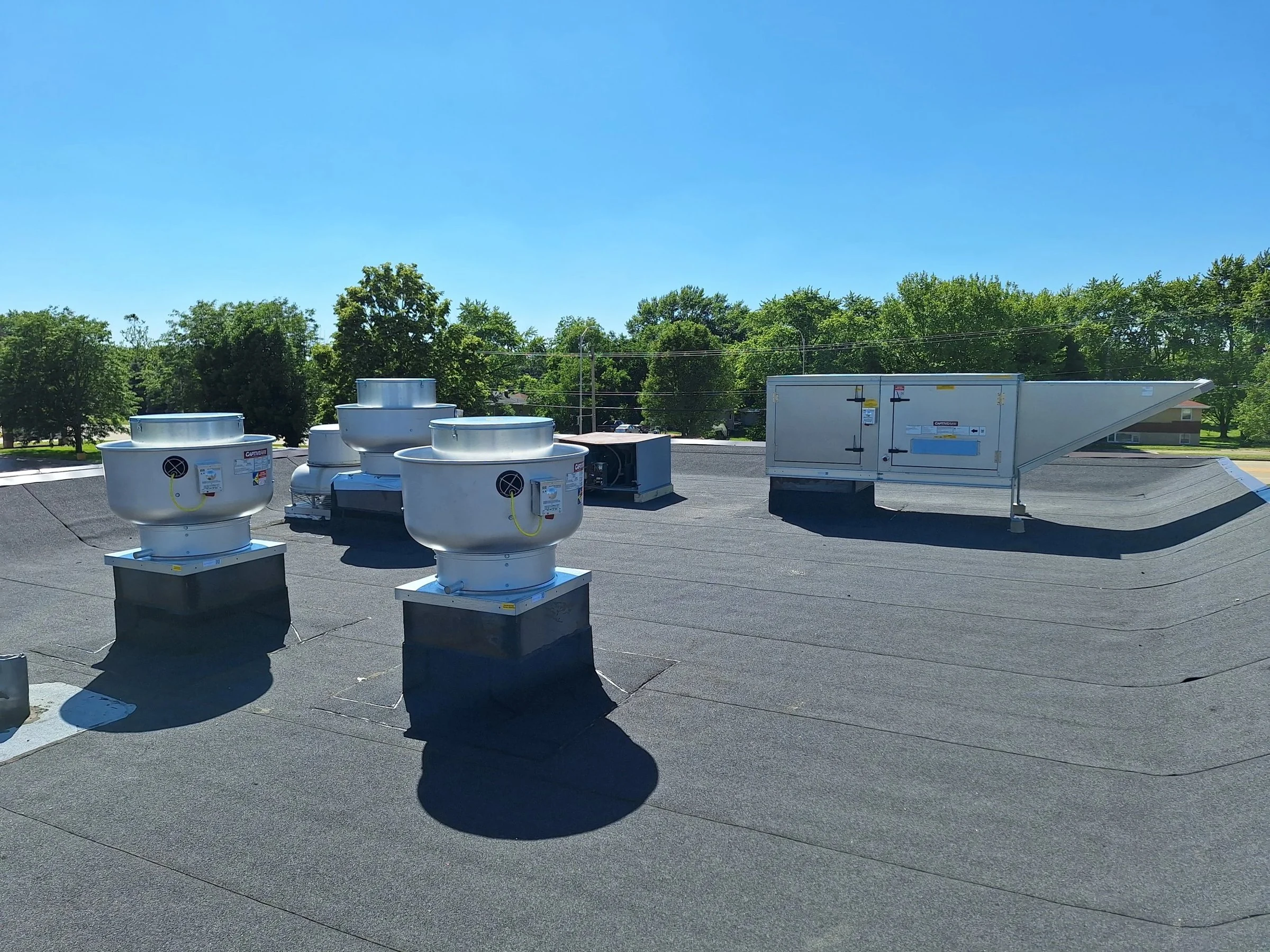
The main store building typically carries a standard low-slope membrane roof with rooftop HVAC and, on many Grand Strand locations, a walk-in cooler condenser bank similar to what we'd find on a small grocery store. The fuel canopy overhead is a different animal entirely - an open structure with no walls to block wind, supported on columns, and subject to uplift forces that a fully enclosed building doesn't experience the same way.
We evaluate canopy fastening, panel seams, and column connection points against the open-structure wind exposure specifically, rather than treating it like a smaller version of the main building roof.
Canopy lighting fixtures recessed into the underside of the structure add another set of penetrations through the panel deck above, each one a potential leak point if the seal around the fixture housing has degraded. We check these from both above and below during a full canopy inspection, since a failure often shows up as a dim or flickering light before it shows up as visible water intrusion overhead.
Working Near Active Fuel Dispensing
Any roof work on or near a fuel canopy has to account for the fact that fuel dispensing is happening directly underneath, which changes how we stage equipment, where we position lifts, and what fire-and-safety precautions apply during the work. We coordinate directly with the store operator on which pumps, if any, need to be taken offline during specific phases of canopy work, and we keep that downtime as limited as the scope allows.
Main building roof work doesn't carry the same fuel-proximity restrictions, so we can generally run that scope independently of canopy work rather than treating the whole property as one shutdown.
For multi-pump sites, we typically sequence canopy work bay by bay rather than shutting the whole canopy down at once, so the store can keep at least a portion of the pumps operating for customers throughout the project.
What We Check on Every Convenience Store Roof
- Fuel canopy panel seams and fastening at columns and edges
- Main building membrane condition and rooftop HVAC curb integrity
- Walk-in cooler condenser curb condition, where present
- Drain and gutter capacity on both the canopy and main roof separately
- Signage and pole-mount attachment points intersecting either roofline
- Corrosion at canopy fasteners and edge trim, which run more exposed than a building roof
Canopy fasteners and edge trim sit fully exposed to sun, rain, and salt air with no parapet or building mass to shield them, which is why we typically see corrosion show up there years before it shows up on the main building roof at the same site.
Keeping the Store Open During the Work
The store itself rarely needs to close for canopy work since the two structures are physically separate, and even main-building roof repairs can usually happen with the store operating below, sectioned the way we'd section any small retail building. We keep staging away from customer parking and the entrance, and time louder work for the store's slower overnight or early-morning hours where the location's traffic pattern supports it.
Convenience stores along the coastal corridors tend to see two distinct traffic patterns - heavy commuter traffic on weekday mornings and evenings, and heavy tourist traffic through the pumps and store during summer weekends. We schedule around whichever pattern applies to that specific location rather than assuming every site on the Grand Strand runs the same daily rhythm.
Questions Store Owners and Operators Ask Us
Air compressor units, propane cage covers, and ice machine enclosures cluster around the main building entrance at a lot of convenience store sites, each with its own small roof or cover structure. We include these in a full-property assessment rather than treating them as separate from the main roofing scope, since a leaking cover over an ice machine causes the same kind of equipment and inventory problem as a leak inside the store itself.
Do the pumps need to shut down during canopy work?
Only during specific phases directly above an active dispenser, and we coordinate that timing with you to keep the downtime as short as possible.
Can the store stay open while you work on the main building roof?
Yes, in almost every case, since we section the work the same way we would on any small retail building.
Why does the canopy roof wear out faster than the store roof?
It's fully exposed with no walls or parapet to shield fasteners and trim from sun, rain, and salt air, so corrosion and wear show up there first.
Do you handle both the canopy and the store roof, or just one?
We scope and quote both, but they're evaluated separately since they're different structures with different wind and access considerations.
What's the biggest safety concern with canopy roof work?
Working above an area with active fuel dispensing below, which is why we coordinate pump shutdowns and follow fire-and-safety precautions specific to that environment, and we brief every crew member on that site plan before work begins each day.